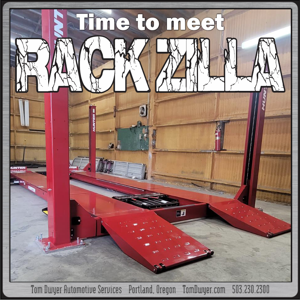
It’s big, it’s red, it’s new, and it unlocks new possibilities for us
We buy a lot of stuff to make the shop run and chances are you won’t care about most of it. Spiffy new cordless scanner? Nope. High-capacity extension cord? Yawn. But this is a new purchase that lets us say “yes” where we’ve had to say “no” in the past. We just installed a MASSIVE NEW RACK in the shop, and we want to tell you all about it.
The Bad Old Days- Up till 1925
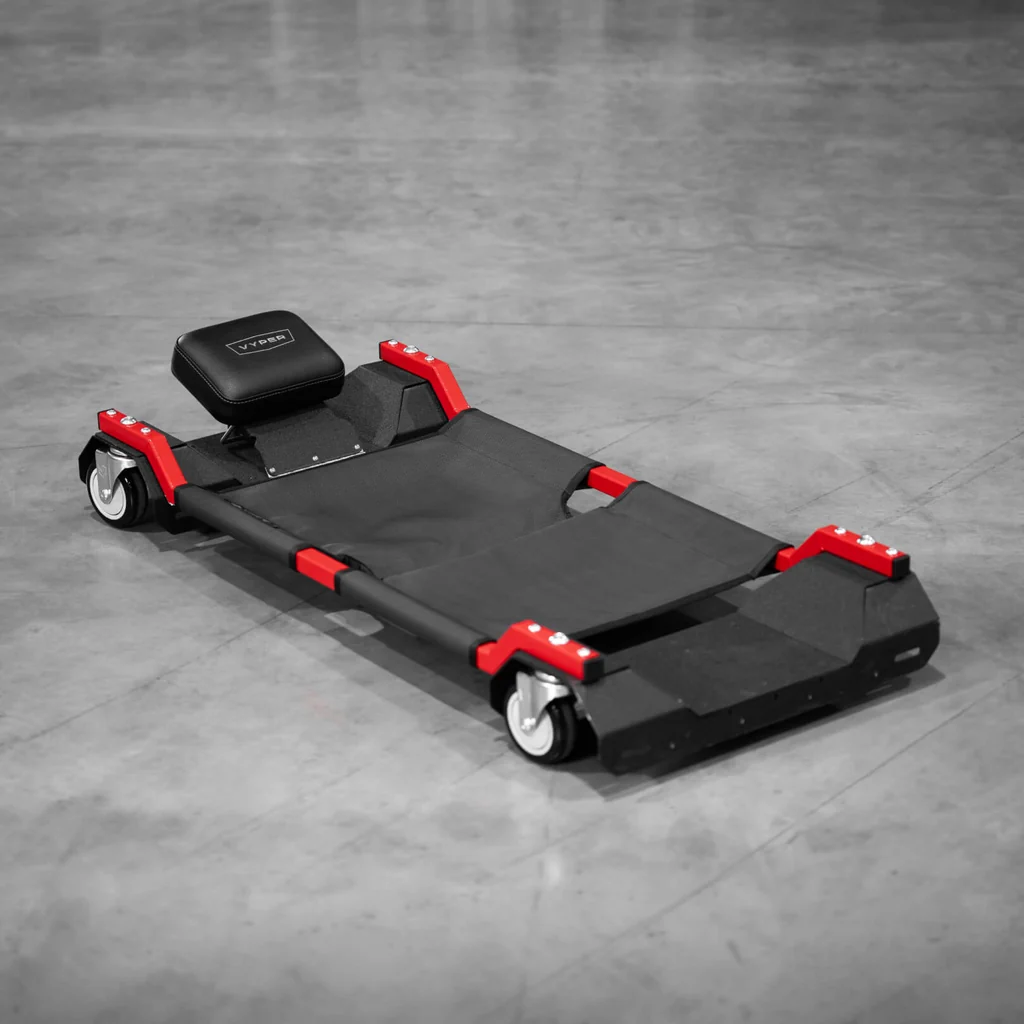
Back in the day, when you could have any car you wanted as long as it was a black Model T, mechanics didn’t need no stinkin’ racks. The vehicle stayed on the ground and the mechanic would lie down on a short stretcher with wheels and work on it from below. As you can imagine the tight spaces and low light meant curse words flowed in a steady stream from beneath each vehicle.
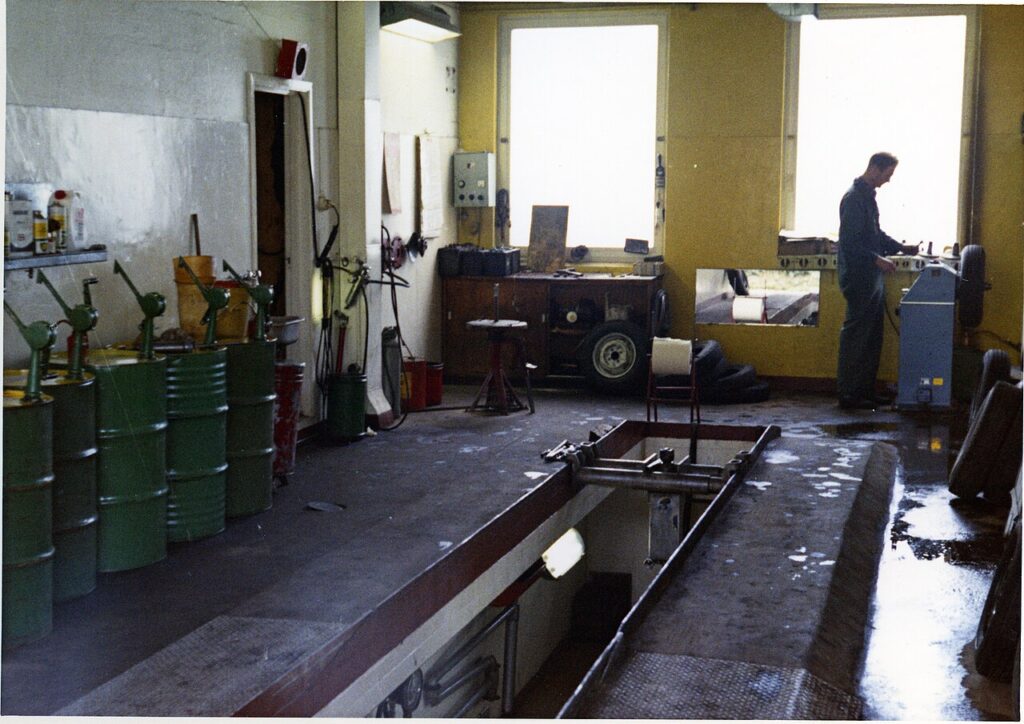
The next evolutionary step was the vehicle inspection pit, or service pit. It was just a hole dug in the shop floor and the vehicle would pull in over the top. Now the mechanic had better access and more movement, but the lighting and ventilation were about what you’d expect from a hole in the ground. Also, not all shops could afford the excavation and expense of a pit. You’ll still find service pits like this in some garages and places like Quicky Lubes.
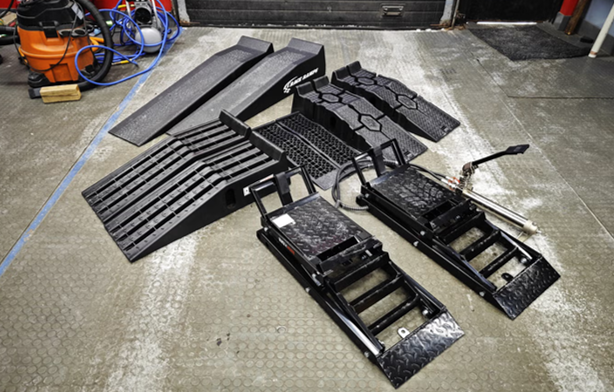
Additional aids like car ramps and jacks have always been available, but none delivered the access, room for movement, or importantly SAFETY that a professional mechanic needed.
The Slightly Better Old Days- 1925-1970
Hydraulic principles were known as far back as the Greeks and were formalized in the 1600’s by Blaise Pascal, but it wasn’t until 1925 that Peter Lunati created the first hydraulic lift. His first design used a single post in the center of the car, but needed a separate motor to pump the fluid as well as a complicated piping system that required constant maintenance. It was the first design and therefore had the most problems, but the idea was solid enough to last another 50 years.
The Really Good Days- 1970 till Yesterday
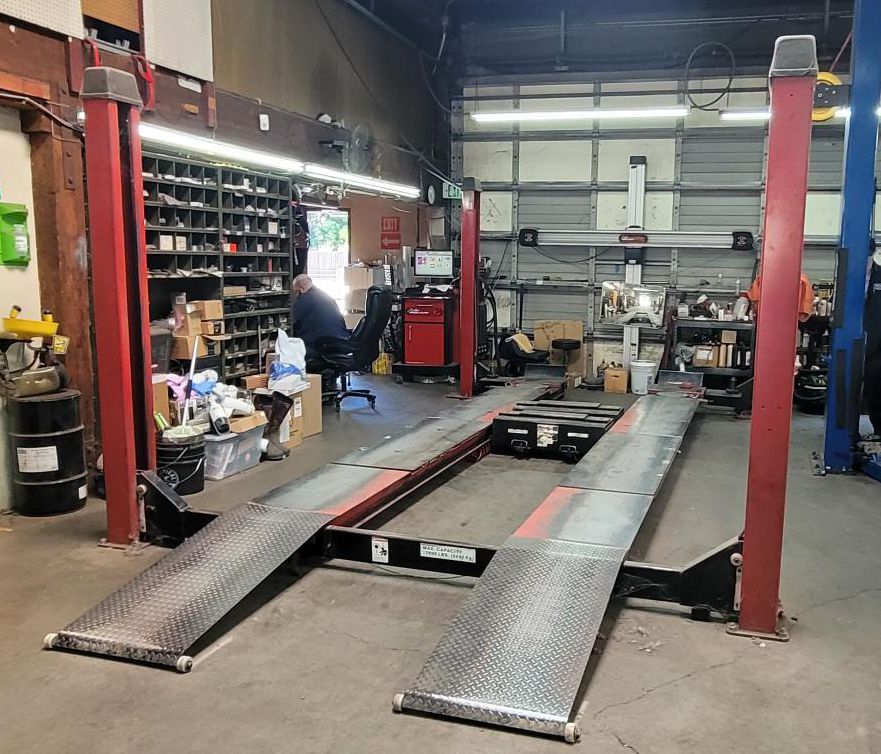
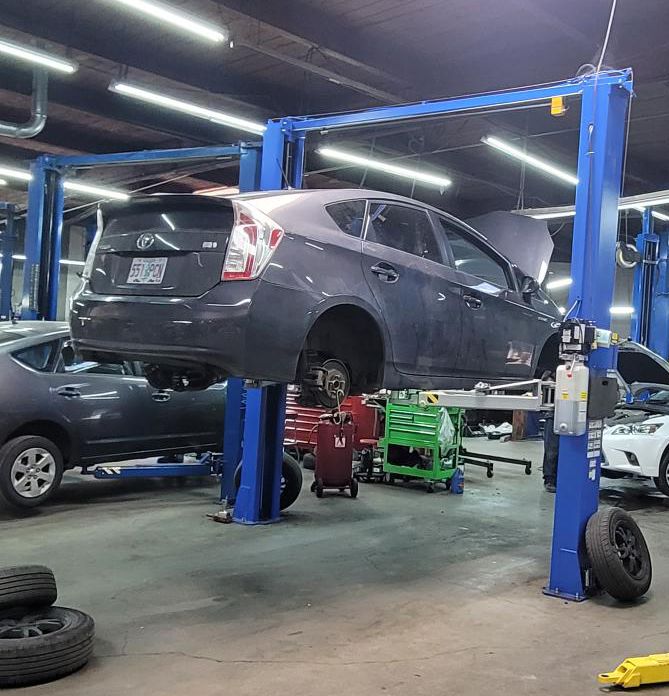
As the one-post designs aged they became harder and more expensive to maintain so many garages chose to sell them rather than repair them. The Automotive Lift Institute (yes, there is one) was founded in 1945 to ensure design standards across the industry. In the 70’s they changed to a performance standard for certification so the old one-post design wasn’t the only option anymore. One post, two post, four post, scissor lifts, and a few other options were experimented with, but the two- and four-post designs won the day. That’s almost all you’ll see today across the industry, and all our racks here at Tom’s are either two- or four-posters.
The Best Days are Today- Our New Rack
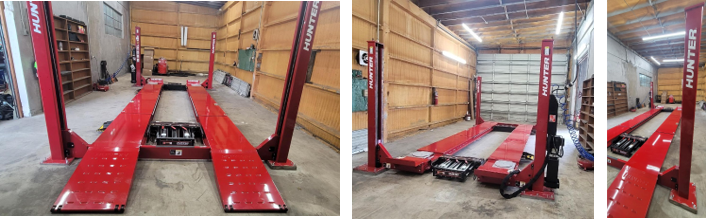
Which brings us to our brand spanking new 4-poster rack. If you look at our 2-poster, you’ll see a cross bar across the top. It’s important because it keeps the rack standing, but it’s a limitation because a tall vehicle (like some Sprinters or Transits) can’t be lifted high enough for us to work under. Also, many vehicles have after-market mechanical systems that keep a 2-poster from accessing appropriate lift points.
That’s not a problem for a 4-post rack. The vehicle just drives onto the rails and the rack just has to lift the rails. Plus, since we’re lifting by the wheels instead of the frame, nothing poking out of the bottom of the vehicle will be in our way.
While the maximum capacity of our existing lifts is 15K pounds, this beast will lift up to 18K with no problem! While we’ve always serviced Transits, ProMasters, and Sprinters, sometimes we’ve had to limit our service on some of them because of those factory mechanical additions on the underside. No more! With no more undercar worries, we can confidently put just about anything up in the air to keep it “safe, breakdown-free, and operating at its best”… a luxury our creeper-riding mechanical forbears could only imagine.
So come on by and see our massive new rack! Depending on what you drive, it may be exactly what you’ve been waiting for.
Digging Deeper…
Tested: The Best Car Ramps, Keeler and Cordell in Car&Driver, Jan 2026
Automotive Lifts- A Shortish History, SLE Technologies
The History of the Auto Lift, NA Auto Equipment